
Blog
How Intel’s Next-Gen Chips Are Powering AI Innovation ?
Case Studies & Success Stories ▪ 2025-03-13
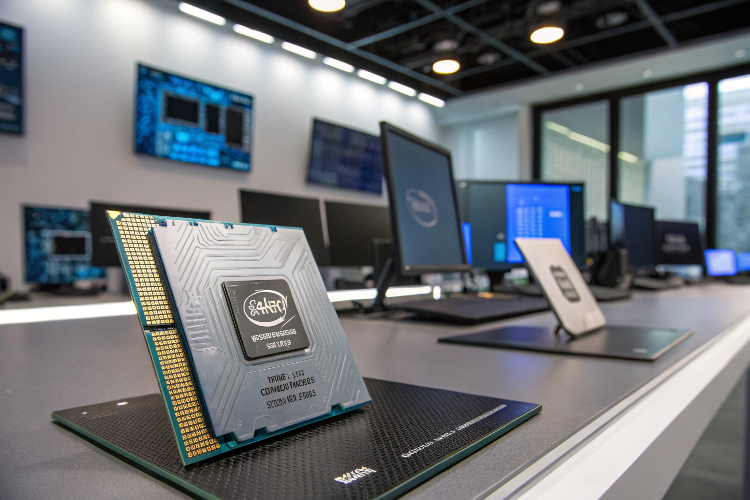
As artificial intelligence (AI) continues to reshape industries, the demand for faster, more efficient, and high-performance computing has never been higher. At the forefront of this revolution is Intel, a global leader in semiconductor innovation. Intel’s next-generation chips are designed to power AI applications across industries, from cloud computing and autonomous vehicles to deep learning and edge AI solutions.
With cutting-edge advancements like Intel’s Xeon processors, Gaudi AI accelerators, and Intel Core Ultra chips, the company is pushing the boundaries of high-performance AI computing. These chips are optimized for deep learning, AI model training, and real-time inferencing, helping businesses harness the full potential of AI-powered solutions.
This blog explores how Intel’s next-gen chips are accelerating AI innovation, their impact on industries, and what the future holds for AI-driven computing.
1️⃣ The Growing Demand for AI-Optimized Chips
✔ AI applications require massive computational power, far beyond what traditional CPUs can handle.
✔ AI workloads such as deep learning, neural networks, and real-time analytics need specialized chips that offer high-speed processing, energy efficiency, and parallel computing.
✅ Why AI Needs High-Performance Chips:
✔ Faster AI Training & Inferencing – Reduces the time required to train complex deep learning models.
✔ Optimized Parallel Processing – AI tasks require multiple simultaneous calculations, which traditional CPUs struggle with.
✔ Energy Efficiency – AI data centers demand power-efficient chips to reduce operational costs.
✔ Scalability for Cloud & Edge Computing – AI is moving beyond data centers to edge devices, autonomous vehicles, and IoT systems.
💡 Example: A chatbot powered by an AI model like GPT-4 requires high-speed processing to handle millions of queries in real-time.
🔗 Pro Tip: AI chips must balance performance, efficiency, and scalability to support the next wave of AI advancements.
2️⃣ Intel’s AI-Optimized Chips: A Game-Changer for AI Computing
✔ Intel is developing next-gen AI chips tailored for deep learning, edge AI, and enterprise applications.
✔ These include Intel Xeon processors, Gaudi AI accelerators, and AI-enhanced consumer chips.
✅ Intel’s Key AI Chips & Technologies:
✔ Intel Xeon Scalable Processors – AI-optimized CPUs for data centers and cloud computing.
✔ Intel Gaudi AI Accelerators – Designed for deep learning model training and inferencing.
✔ Intel Core Ultra (Meteor Lake) – AI-powered chips for consumer laptops and edge computing.
✔ Intel FPGAs & Neural Processing Units (NPUs) – Custom AI accelerators for specialized applications.
💡 Example: Intel’s Gaudi 2 AI accelerator outperforms traditional GPUs in AI model training while consuming less power.
🔗 Pro Tip: Intel’s AI chips optimize computing efficiency by integrating CPUs, GPUs, and specialized AI accelerators.
3️⃣ Intel Xeon Scalable Processors: AI at the Data Center Level
✔ Intel Xeon processors are designed for high-performance AI workloads in cloud computing, machine learning, and big data analytics.
✔ These processors power AI-driven cloud platforms, enterprise applications, and AI-as-a-Service models.
✅ Why Intel Xeon is Ideal for AI Computing:
✔ Built-in AI Acceleration – Features Intel DL Boost for optimized deep learning.
✔ Scalability for Data Centers – Supports large-scale AI workloads efficiently.
✔ Powerful Multi-Core Architecture – Handles complex AI computations with high throughput.
✔ Cloud AI Optimization – Works with platforms like Microsoft Azure, Google Cloud, and AWS AI services.
💡 Example: AI-powered recommendation engines, such as Netflix and Amazon’s product recommendations, use Intel Xeon for real-time processing.
🔗 Pro Tip: Intel Xeon chips are the backbone of enterprise AI, making large-scale machine learning applications possible.
4️⃣ Intel Gaudi AI Accelerators: Challenging NVIDIA in Deep Learning
✔ Intel’s Gaudi AI accelerator series is designed to compete with NVIDIA’s AI GPUs, offering better performance for deep learning training and inference.
✔ These accelerators optimize natural language processing (NLP), image recognition, and AI-powered automation.
✅ Intel Gaudi’s AI Advantages Over GPUs:
✔ Higher AI Throughput – Outperforms GPUs in large-scale deep learning.
✔ Lower Energy Consumption – More efficient than traditional AI processors.
✔ Optimized for Deep Learning Frameworks – Works seamlessly with TensorFlow and PyTorch.
✔ Cost-Effective for AI Training – Reduces hardware costs for enterprises deploying AI models.
💡 Example: Intel Gaudi-powered AI servers are being used to train large-scale generative AI models, like ChatGPT and MidJourney.
🔗 Pro Tip: Gaudi accelerators are ideal for enterprises looking to train large AI models efficiently.
5️⃣ Intel Core Ultra (Meteor Lake): Bringing AI to Consumer Devices
✔ AI is moving beyond data centers to consumer laptops, gaming PCs, and mobile devices.
✔ Intel’s Core Ultra (Meteor Lake) processors integrate AI-powered capabilities for faster processing, better battery life, and intelligent computing.
✅ How Intel Core Ultra is Transforming AI in Consumer Devices:
✔ Neural Processing Unit (NPU) for AI Acceleration – Handles AI-driven tasks more efficiently.
✔ Power Efficiency for AI Workloads – Reduces battery consumption in AI-powered applications.
✔ Advanced AI-Assisted Graphics & Gaming – Enhances real-time rendering and visual effects.
✔ AI-Powered Security & Privacy – AI-driven malware detection and threat prevention.
💡 Example: AI-enhanced video conferencing, powered by Intel Core Ultra, improves background noise cancellation and facial tracking.
🔗 Pro Tip: Meteor Lake processors bring AI optimization to everyday computing, making devices smarter and more efficient.
6️⃣ Intel’s Role in AI-Powered Autonomous Vehicles & Robotics
✔ AI-powered chips are essential for self-driving cars, robotics, and industrial automation.
✔ Intel’s AI-driven automotive chips enable real-time perception, sensor fusion, and AI-based decision-making.
✅ How Intel AI Chips Power Autonomous Vehicles:
✔ Computer Vision & Object Detection – Enhances real-time navigation.
✔ AI-Based Decision Making – Processes vast amounts of sensor data.
✔ Energy-Efficient AI Processing – Reduces power consumption in electric vehicles.
✔ Integration with Edge AI – Optimizes AI inference for faster response times.
💡 Example: Intel’s Mobileye technology powers self-driving systems for automakers like BMW and Volkswagen.
🔗 Pro Tip: AI-driven autonomous systems require specialized chips for ultra-fast decision-making.
7️⃣ The Future of Intel AI Chips: What’s Next?
🚀 Intel is continuously innovating its AI chip technology to meet the growing demand for AI-powered computing.
✅ Upcoming Innovations in Intel’s AI Chips:
✔ AI-Powered Quantum Computing – Future Intel chips will integrate quantum AI processing.
✔ Ultra-Low Power AI Chips for Edge Devices – Optimized for IoT and mobile AI.
✔ AI-Driven Chip Architecture – Next-gen processors will use AI to optimize performance dynamically.
✔ Hybrid AI-Chip Designs – Combining CPUs, GPUs, and AI accelerators in a single package.
💡 Example: Intel’s research into neuromorphic computing aims to create AI chips that mimic the human brain’s neural processing.
🔗 Pro Tip: Future AI chips will blend deep learning, quantum computing, and neuromorphic processing for unprecedented performance.
Intel’s next-gen AI chips are revolutionizing computing, powering AI-driven applications across industries. With Xeon processors, Gaudi AI accelerators, and Core Ultra chips, Intel is pushing the limits of AI performance, energy efficiency, and scalability.
Key Takeaways:
✅ Intel’s AI chips enhance deep learning, cloud computing, and consumer AI applications.
✅ Gaudi AI accelerators compete with NVIDIA in deep learning model training.
✅ Core Ultra (Meteor Lake) brings AI to consumer devices, enhancing smart computing.
✅ The future of AI chips includes quantum computing, neuromorphic processing, and AI-optimized chip architecture.


.png)